


To apply for British citizenship today, most adults need the right citizenship route, qualifying UK residence, indefinite leave to remain or settled status, acceptable English language evidence, a Life in the UK Test pass, two suitable referees, good character, accurate supporting documents, biometrics and the correct application fee.
For many people, this means applying for naturalisation as a British citizen after living in the UK lawfully for several years. The exact requirements depend on your circumstances, especially whether you are applying through the standard residence route or as the spouse or civil partner of a British citizen.
British citizenship is a major step, so it is worth checking everything before you press submit. A small error, such as using the wrong English test or miscounting travel dates, can create stress and may put a sizeable fee at risk.
Immigration 4U supports individuals and families with UK nationality and immigration matters, including citizenship preparation, document checks, settlement issues and more complex application histories. The aim is to help you understand what applies to you before you commit to an application.
First Check Which Citizenship Route Applies
Before gathering documents, you need to know which British citizenship route fits your situation. Not everyone applies in the same way, and choosing the wrong route can lead to avoidable problems.
Most adults apply for naturalisation. This is usually the route for people who have lived in the UK for the required period and already hold indefinite leave to remain, indefinite leave to enter or settled status under the EU Settlement Scheme. If you are preparing for this route, Immigration 4U has a dedicated British citizenship application service page with more information about how professional support can help.
If you are married to, or in a civil partnership with, a British citizen, a shorter residence period may apply. However, you still usually need permanent immigration status, such as ILR or settled status, and you must meet the other naturalisation requirements.
Some people do not naturalise at all. Children and certain adults with British parents, historic nationality links or special circumstances may apply by registration instead. A small number of people may already be British citizens automatically, although being born in the UK does not always mean you are automatically British. If you are unsure, it is sensible to check the route carefully before applying.
British Citizenship Requirements Checklist
The core requirements for British citizenship through naturalisation are practical, but they need careful checking. Think of the application as a picture of your residence, identity, immigration history and character.
- You are aged 18 or over and can make the application in your own right.
- You have the required qualifying residence period in the UK.
- You hold ILR, indefinite leave to enter or settled status, where required.
- You meet the permitted absence limits for your route.
- You were physically present in the UK on the relevant qualifying date.
- You have passed the Life in the UK Test, unless exempt.
- You meet the English, Welsh or Scottish Gaelic language requirement, unless exempt.
- You can provide two eligible referees who meet the Home Office criteria.
- You meet the good character requirement and disclose relevant matters honestly.
- You can provide identity, residence and immigration status evidence.
- You can pay the correct fee and attend biometrics when invited.
This checklist is helpful, but it is only the starting point. Each item has its own rules, and those rules can change, so always check the latest official position before submitting.
Residence, ILR And Settled Status
Residence is one of the most important parts of a naturalisation application. The Home Office needs to see that you have built a qualifying period of residence in the UK and that your immigration status allows you to apply.
Under the standard route, applicants usually need to have lived in the UK for five years and have held ILR, indefinite leave to enter or settled status for at least 12 months before applying. If you are applying as the spouse or civil partner of a British citizen, the qualifying residence period is usually three years, and the extra 12 month wait after permanent status does not usually apply.
Your absence record also matters. For the standard route, the usual limit is no more than 450 days outside the UK during the five year qualifying period and no more than 90 days outside the UK in the final 12 months. For the spouse or civil partner route, the usual overall limit is lower because the qualifying period is shorter.
There is also a date specific rule that applicants often miss. You usually need to have been physically present in the UK exactly five years before the Home Office receives your application, or exactly three years before if you are applying as the spouse or civil partner of a British citizen. For example, if you submit online on 8 October 2026, you should check whether you were in the UK on 8 October 2021 under the standard route. It sounds picky, but nationality law is rather fond of exact dates.
If you do not yet have permanent status, you may need to deal with settlement first. Immigration 4U explains this separate stage on its settlement application page, which is useful if you are not sure whether you should be applying for ILR before citizenship.
Documents You Need To Apply For British Citizenship
Your documents should prove who you are, where you have lived, what immigration status you hold and whether you meet the knowledge of language and life requirements. The exact evidence depends on your route and circumstances.
You will normally need your current passport and, where available, previous passports covering the qualifying residence period. If you have changed your name, you may need evidence such as a marriage certificate, deed poll or other official document. You may also need a biometric residence permit, digital immigration status evidence or Home Office correspondence confirming ILR, indefinite leave to enter or settled status.
Residence evidence can include passport stamps, travel bookings, boarding passes, employer letters, payslips, university letters, tenancy documents or other records that help confirm your time in the UK. Passport stamps alone may not show every journey, especially if you used eGates, so it is sensible to build your own travel record from emails, tickets and calendars.
You will also need your Life in the UK Test pass reference unless you are exempt. For English language, evidence might include an approved speaking and listening test at B1 level or higher, an eligible degree taught or researched in English, or evidence that you are a national of a majority English speaking country. Do not assume that every English qualification will be accepted. GCSEs, A levels and vocational qualifications are not automatically suitable just because they were studied in English.
The official GOV.UK British citizenship guidance is the best place to check the current route information and supporting requirements before you submit.
Life In The UK Test And English Language Evidence
Most applicants for British citizenship must show knowledge of life in the UK and an acceptable level of English, Welsh or Scottish Gaelic. These requirements are separate, so passing one does not usually remove the need for the other.
The Life in the UK Test is a computer based test about British history, government, law, society and everyday life. It must be booked through the official service, and you should keep the pass reference safe. If you lose it, your application preparation becomes more annoying than it needs to be.
The English language requirement is another common source of mistakes. If you take a Secure English Language Test, it must be from an approved provider and must test speaking and listening at the required level. If you rely on a degree, you may need evidence that it was taught or researched in English and, for overseas degrees, additional confirmation of comparability may be required.
Some applicants are exempt because of age, medical circumstances or nationality. Exemptions are not something to guess. If you intend to rely on one, make sure you have the correct evidence before applying.
Referees And Good Character
Naturalisation applicants usually need two referees. These are people who can confirm your identity and support the information in your application, but they must meet the Home Office criteria.
In general, referees should have known you personally for at least three years. One is usually expected to be a professional person, while the other should normally be a British citizen with a British passport and either a professional person or over 25. They must not be close relatives, must not be related to each other and should not be your immigration representative.
The good character requirement is broader than many people realise. It can include criminal convictions, cautions, civil penalties, immigration breaches, deception, unpaid taxes or other matters that the Home Office considers relevant. This does not mean that every historic issue automatically leads to refusal, but it does mean disclosure and careful explanation are important.
If you have a previous refusal, overstaying issue, criminal matter or complex tax history, it is wise to get advice before applying. Trying to hide a problem is usually far riskier than dealing with it properly.
Fees, Biometrics And The Application Process
British citizenship is applied for online in most cases. You complete the form, pay the fee, upload supporting documents and attend a biometrics appointment when instructed.
Nationality fees can change, and the amount you need to pay may depend on the application type and any ceremony arrangements that apply. The Life in the UK Test also has its own fee. Before you submit or pay, check the live GOV.UK fee information so you are relying on the current official figures rather than an outdated amount.
Biometrics usually means providing fingerprints and a photograph. The appointment does not decide your application, but it is a required identity step. After submission, keep copies of what you uploaded and respond promptly if the Home Office asks for more information.
If you are still on limited permission when applying, do not assume the citizenship application protects your immigration status. You should make sure you continue to have lawful permission until citizenship is granted and the ceremony has taken place.
What Happens After Approval?
Approval is a wonderful moment, but it is not quite the final step. Adults normally need to attend a citizenship ceremony before becoming British citizens.
At the ceremony, you make an oath or affirmation of allegiance and a pledge. You then receive your certificate of naturalisation. That certificate is important, so keep it safe. You will usually need it if you later apply for your first British passport.
Ceremony arrangements vary by local authority. If you live in Manchester, for example, your ceremony will be arranged locally rather than by the application form itself. Always follow the instructions in your Home Office invitation and check local council requirements before attending.
You should also consider dual nationality before applying. The UK allows dual citizenship, but your current country of nationality may not. If keeping your existing nationality matters to you, check that country’s rules before you naturalise.
Common Mistakes To Avoid
The most common citizenship mistakes are usually avoidable. Applicants often apply too early, miscalculate absences, use the wrong English evidence, choose unsuitable referees or forget to disclose something that should have been declared.
Another frequent issue is inconsistency. If your travel history, employment dates, passport records and previous immigration applications do not line up, the Home Office may ask questions. It is much better to spot those issues before applying than after submission.
If you are unsure about your previous visas, it may help to review your overall UK immigration history. For broader context on how UK routes differ, Immigration 4U has written about the different types of UK visa available, which can help explain how earlier immigration categories may fit into your journey towards settlement and citizenship.
How Immigration 4U Can Help
British citizenship applications are personal. Two people may have lived in the UK for the same length of time but face very different issues because of absences, family circumstances, immigration history or evidence gaps.
Immigration 4U can help you identify the right route, check whether you meet the residence and status requirements, review your documents, assess potential good character concerns and prepare the application in a clear and organised way. Professional support cannot guarantee approval, but it can help reduce avoidable mistakes and give you a clearer understanding of your position before you apply.
Frequently Asked Questions
Can I Apply For British Citizenship Immediately After ILR?
Under the standard route, you usually need to wait 12 months after getting ILR or settled status. If you are married to or in a civil partnership with a British citizen, that extra waiting period may not apply, provided you meet the other rules.
How Many Days Can I Spend Outside The UK?
The standard naturalisation route usually allows up to 450 days outside the UK during the five year qualifying period and up to 90 days in the final 12 months. Different limits usually apply to the spouse or civil partner route.
Do I Need Two Referees For British Citizenship?
Yes, most adult naturalisation applicants need two suitable referees who meet the Home Office requirements. They should know you personally and be able to confirm your identity.
Can I Apply If I Have A Criminal Conviction?
A conviction does not always mean automatic refusal, but it can affect the good character assessment. You should disclose relevant matters honestly and consider advice before applying.
Does British Citizenship Automatically Give Me A Passport?
No. After approval, adults usually attend a citizenship ceremony and receive a naturalisation certificate. You can then use that certificate to apply separately for a British passport.
If you are planning to apply for British citizenship, one of the first questions you may have is how long does citizenship application take uk? Most British citizenship applications are usually decided within 6 months, although some applications can take longer if further information or checks are required.
The overall process does not end when you receive a decision. If your application is approved and you are aged 18 or over, you will normally need to attend a citizenship ceremony before you can receive your naturalisation certificate.
How Long Does Citizenship Application Take UK?
The Home Office aims to make a decision on British citizenship applications within 6 months from the date it receives the application. Some applications may be decided sooner, while more complicated cases can take longer. If your application is expected to take more than 6 months, the Home Office should contact you before the six-month period has passed.
The six-month period refers to the decision on your citizenship application. It should not be confused with the entire journey from preparing your documents to attending your citizenship ceremony.
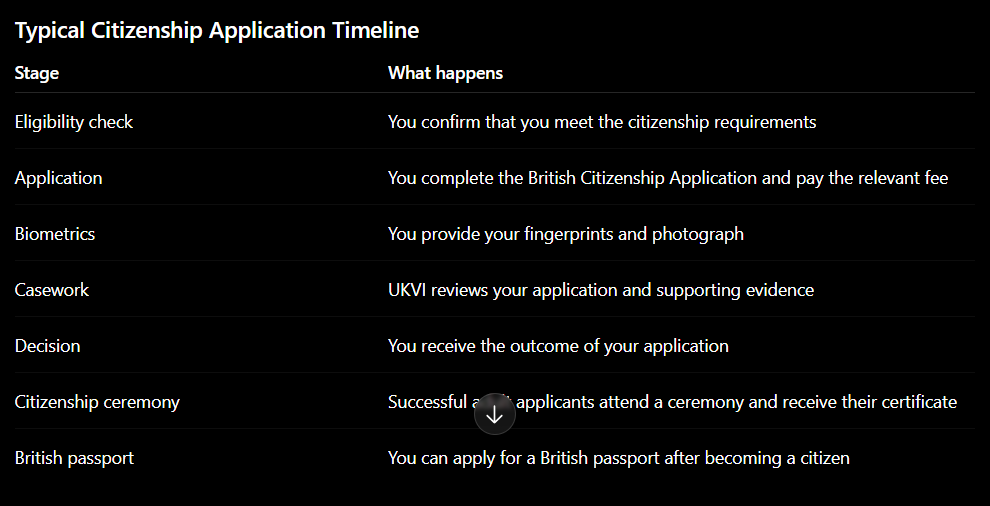
Typical Citizenship Application Timeline
What Happens After a British Citizenship Application?
After submitting your application, you will receive confirmation that it has been received. You will then need to complete the biometric part of the process if required.
For naturalisation applications, applicants are given instructions about enrolling their biometric details after submitting the application. The Home Office may also ask for additional information if it needs clarification before making a decision.
You should therefore keep your contact details up to date while your application is being considered.
How Long Does British Citizenship Take After Biometrics?
The standard processing target is still generally within 6 months. However, the exact time can vary from one application to another.
Factors that may affect the processing time include:
- Whether your application is complete
- Whether all required documents have been provided
- Whether further information is required
- Your immigration and residence history
- The complexity of your circumstances
- Additional checks that UKVI may need to complete
A straightforward application with complete and consistent evidence may progress without the need for additional information. However, meeting all eligibility requirements does not guarantee that every application will receive a decision within a particular number of weeks.
Why Can a British Citizenship Application Take Longer?
Although the Home Office aims to conclude applications within 6 months, some cases take longer.
A delay can occur when UKVI needs to:
- Check information provided in the application
- Request additional documents
- Clarify your residence history
- Review your immigration history
- Carry out additional background checks
- Consider complex personal circumstances
- Verify information with another government department
If the Home Office expects your application to take longer than 6 months, it should normally contact you before that period has passed.
Does the Type of British Citizenship Application Affect Processing Time?
Yes. British citizenship can be obtained through different routes, so the requirements and evidence needed can vary.
Many adults apply for citizenship through naturalisation, usually using Form AN. Other applicants may qualify through registration, including certain children and people with specific British nationality circumstances.
Despite these differences, GOV.UK guidance for several citizenship routes states that applications are generally expected to be concluded within 6 months. This means you should identify the correct route before applying rather than assuming that every applicant should use the same form.
How Long Does Naturalisation Take in the UK?
For adults applying for British citizenship through naturalisation, the Home Office generally aims to make a decision within 6 months.
Before applying, most applicants need to satisfy requirements relating to matters such as:
- Immigration status
- Residence in the UK
- Absences from the UK
- English language knowledge
- Life in the UK test
- Good character
- Intention to make the UK their home, where applicable
- Referees
The requirements can differ if you are applying as the spouse or civil partner of a British citizen.
How Long After Citizenship Approval Is the Ceremony?
Receiving an approval does not necessarily mean the process is completely finished.
If you are aged 18 or over and your application is successful, you will normally need to attend a citizenship ceremony. At the ceremony, you make the required oath and pledge and receive your naturalisation certificate.
For many applicants, the ceremony is arranged through their local authority after the Home Office sends an invitation. The time between your approval and ceremony can therefore add to the overall time before you have your citizenship certificate.
Can You Travel While Your Citizenship Application Is Pending?
A British Citizenship Application does not itself give you immigration permission to remain in the UK.
If you already have valid immigration status and a valid passport, you can generally travel while your application is being considered. However, you must make sure that you maintain the immigration permission needed to return to the UK while your citizenship application is pending. You should also make sure that UKVI can contact you if it needs further information.
Can You Get a Faster British Citizenship Decision?
Applicants should be careful about assuming that the faster decision services available for some visa and settlement applications automatically apply to standard citizenship applications.
The official nationality guidance states that applicants may be able to pay for a faster decision in some circumstances, but availability depends on the specific application and current Home Office arrangements.
Before paying for any additional service, check the current GOV.UK guidance for your particular citizenship route.
What Can You Do to Avoid Delays?
There is no way to guarantee a faster citizenship decision, but submitting a complete and accurate application can help avoid unnecessary problems.
Before submitting your application:
- Check that you are using the correct citizenship route
- Review the residence requirements carefully
- Check your travel and absence records
- Make sure your immigration status meets the requirements
- Confirm your Life in the UK test result
- Check your English language evidence
- Provide the required referee details
- Make sure your documents are accurate and consistent
- Complete your biometric requirements within the required timeframe
- Keep your contact details up to date
For example, current guidance states that applicants are normally required to enrol their biometric information within 45 days of submitting an application.
What Happens If Your Citizenship Application Is Refused?
If your application is refused, the next step depends on the reason for the refusal.
A refusal does not necessarily mean that you can never become a British citizen. You should first understand why the application was refused and whether the issue can be addressed through a new application or another available process.
This is one reason why checking eligibility and supporting evidence carefully before submitting a British Citizenship Application is important.
British Citizenship Application Checklist
Before submitting your application, make sure you have considered:
- Eligibility: Do you qualify for naturalisation or registration?
- Residence: Do you meet the relevant residence requirements?
- Absences: Are your UK travel records within the applicable limits?
- Immigration status: Do you have the required status?
- English: Can you demonstrate the required knowledge of English, Welsh or Scottish Gaelic?
- Life in the UK: Have you passed the required test?
- Good character: Do you meet the good character requirement?
- Referees: Have you provided the required referee information?
- Biometrics: Are you ready to complete the biometric process?
- Documents: Are your supporting documents complete and accurate?
Conclusion
So, how long does citizenship application take uk? For most applicants, the Home Office aims to make a decision within 6 months, although some cases can take longer. The exact timeframe depends on the application and whether UKVI needs additional information or checks.
Remember that the decision is only one part of the process. Successful adult applicants normally need to attend a citizenship ceremony before receiving their naturalisation certificate.
If you are preparing a British Citizenship Application, checking your eligibility, residence history, documents and biometric requirements carefully can help you avoid preventable issues. Immigration 4U can provide guidance throughout the application process
FAQs
1. How Long Does Citizenship Application Take UK?
Most British citizenship applications are usually decided within 6 months. Some applications can take longer, and the Home Office should normally contact you if it expects the decision to take more than 6 months.
2. How Long Does British Citizenship Take After Applying?
The Home Office generally aims to make a decision within 6 months. After approval, adults aged 18 or over normally need to attend a citizenship ceremony before receiving their naturalisation certificate.
3. Can I Travel While My Citizenship Application Is Being Processed?
You can generally travel using your valid passport and existing immigration status while your application is being considered. A citizenship application itself does not give you immigration permission to remain in or enter the UK.
4. Can My Citizenship Application Take Longer Than 6 Months?
Yes. Six months is the standard processing target, not an absolute guarantee. Some applications take longer because UKVI may need additional information or checks.
5. Can Immigration 4u Help With A British Citizenship Application?
Immigration 4U can help applicants understand the British citizenship process, assess the relevant requirements and prepare their application. Applicants should always check the latest GOV.UK requirements before submitting an application.